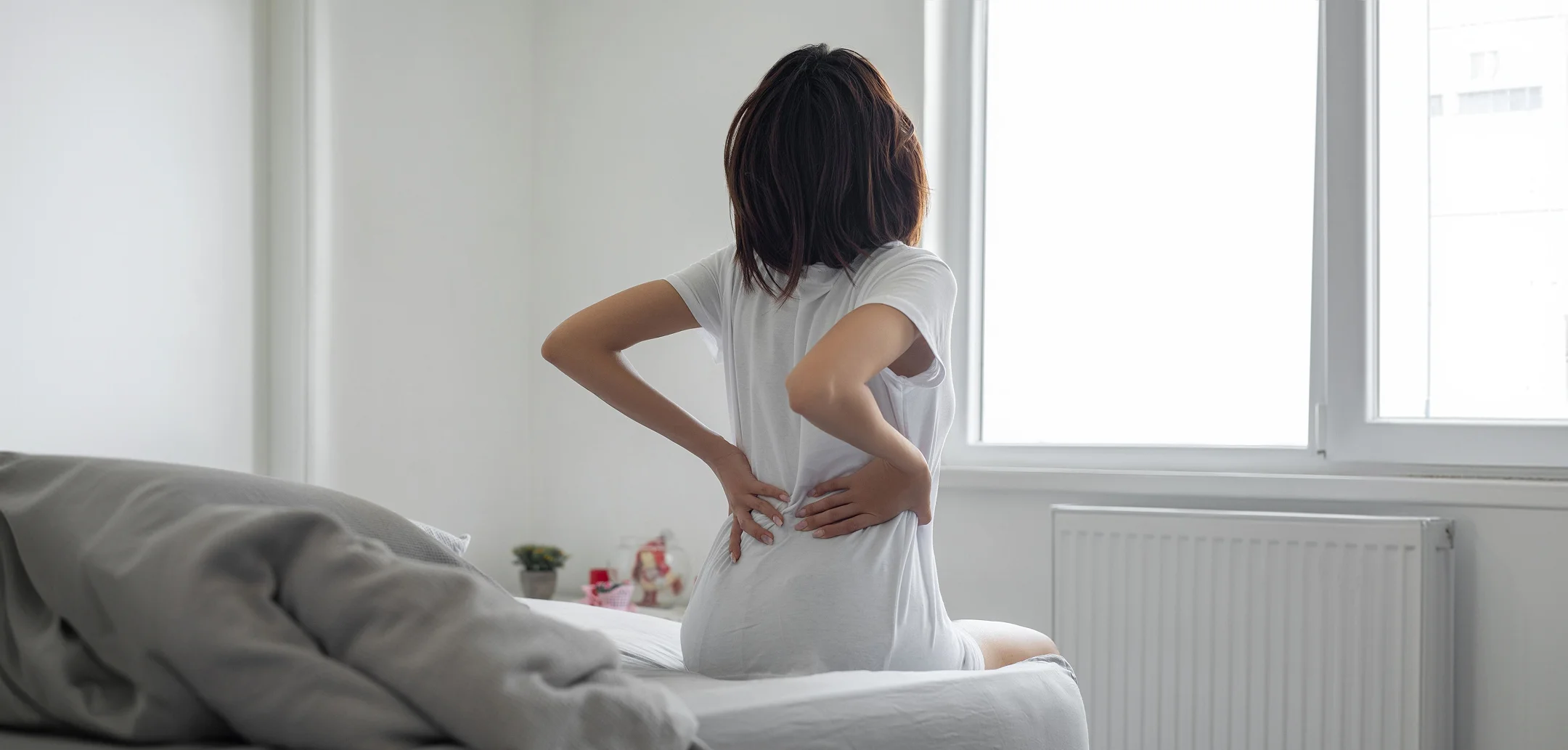
Lower back pain affects an estimated eight in ten adults at some point in their lives and it becomes increasingly common with age. For adults over 65, even everyday tasks can trigger symptoms if the spine or surrounding muscles are already irritated.
Understanding what causes lower back pain is the first step toward finding the right treatment and preventing future flare ups.
Common causes of lower back pain
Lower back pain can stem from many sources including muscles, joints, discs, and nerves. Some conditions develop suddenly while others progress slowly over time.
Lumbar muscle strain
A lumbar strain is one of the most frequent reasons for acute back pain. It occurs when the muscles or soft tissues in the lower back get irritated or stretched beyond their limits, causing inflammation and stiffness. Lumbar strains often improve with
appropriate modalities, gentle movement, proper posture, and guided strengthening exercises.
Sciatica

Symptoms can include aching, sharp, or burning pain, tingling and/or numbness in your leg. Most cases improve significantly with physical therapy including postural correction, gentle strengthening and stretching, all aimed at calming down the nerve and
reducing irritation in the area.
Arthritis and spinal degeneration
As adults age, the joints of the spine naturally experience wear and tear. This can lead to osteoarthritis, spinal stenosis, or degenerative disc disease, which may cause stress on the joints, discs, and nerves in the area and contribute to low back pain. This
can also make standing, walking, and daily activities more difficult. Improving your core stability, incorporating appropriate stretches of the spine and legs, and overall posture correction can make a significant difference in symptoms and function.

Poor posture and weak core muscles
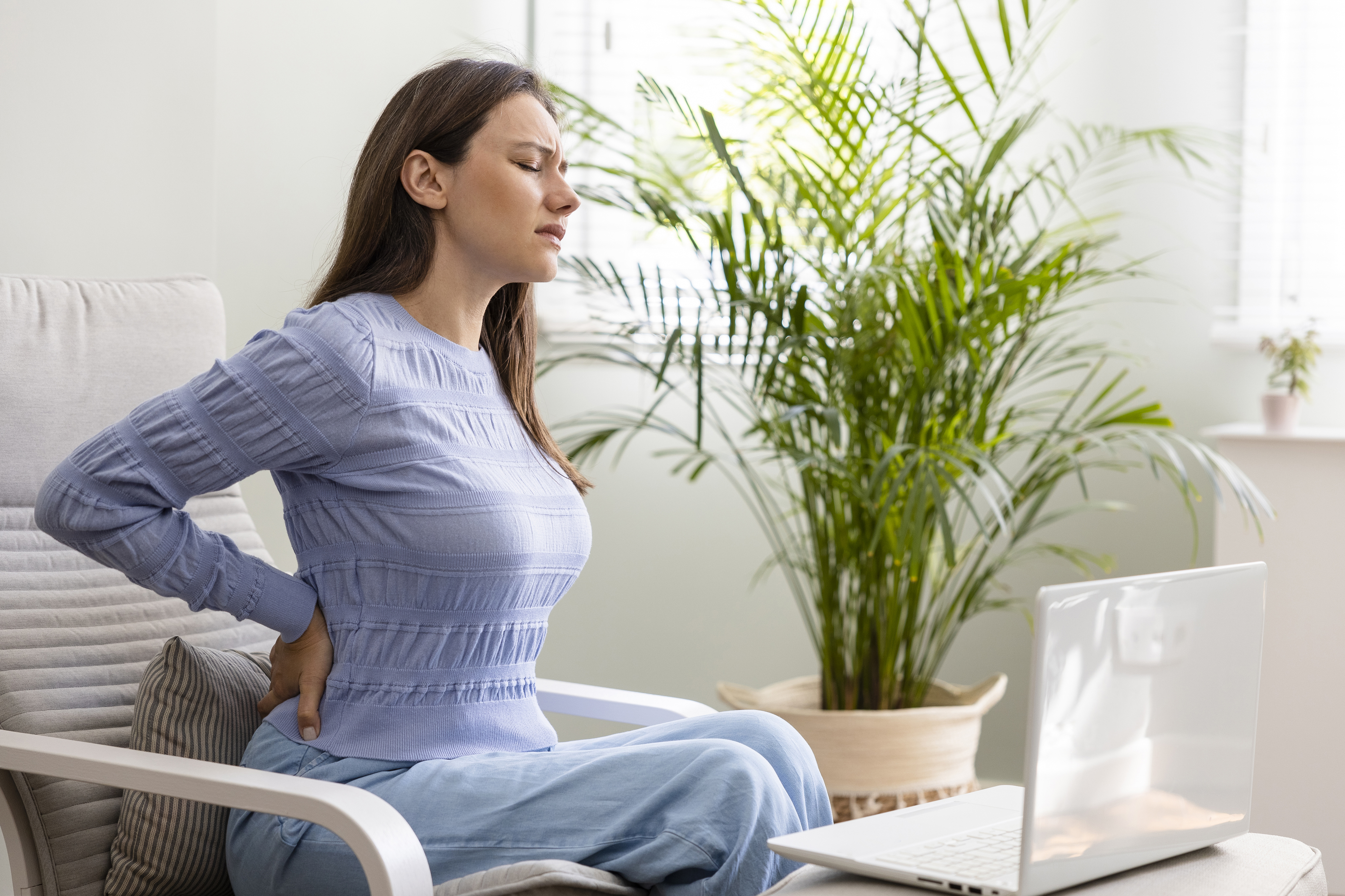
Sitting for long periods especially with a rounded posture places added stress on the lumbar spine. Weak core and glute muscles may also force the low back to overwork during daily activities creating tightness or pain.
When to consider physical therapy

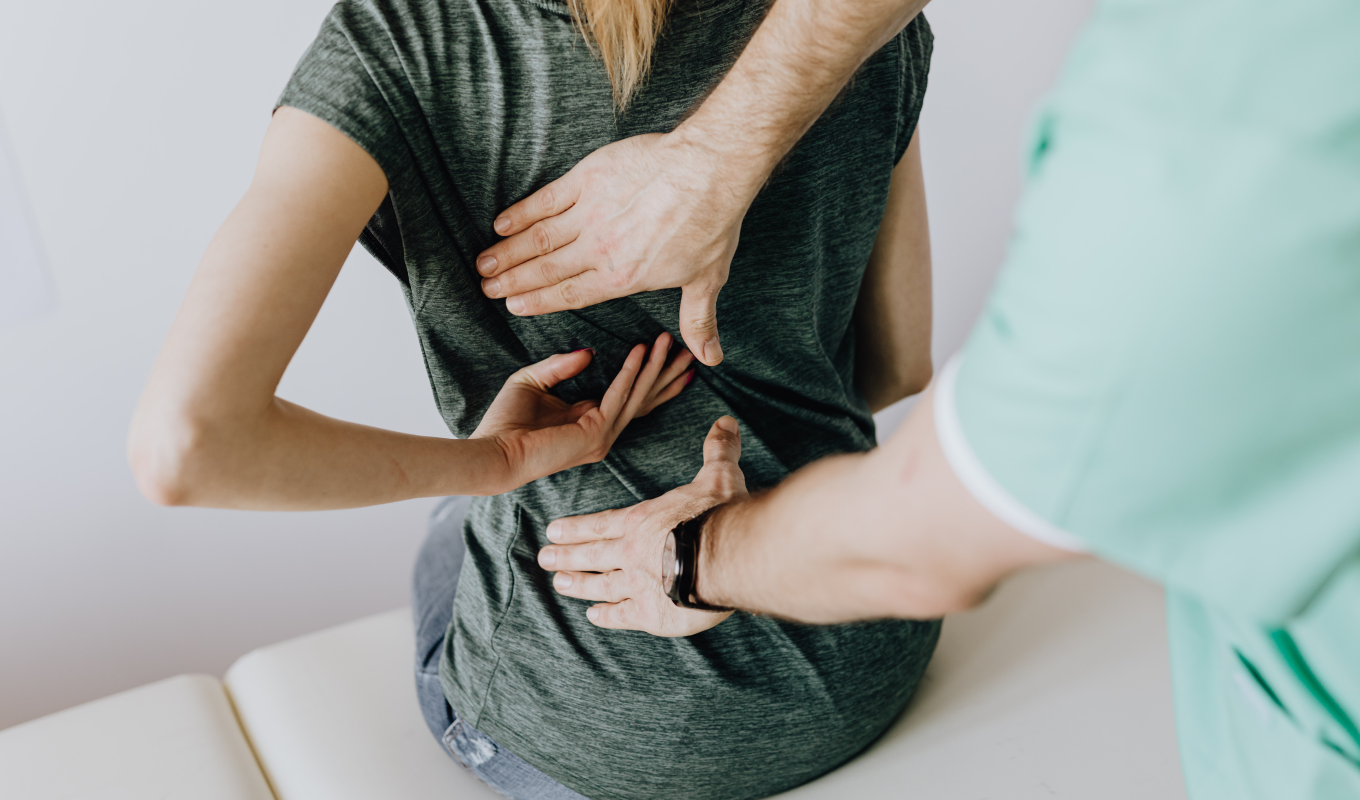
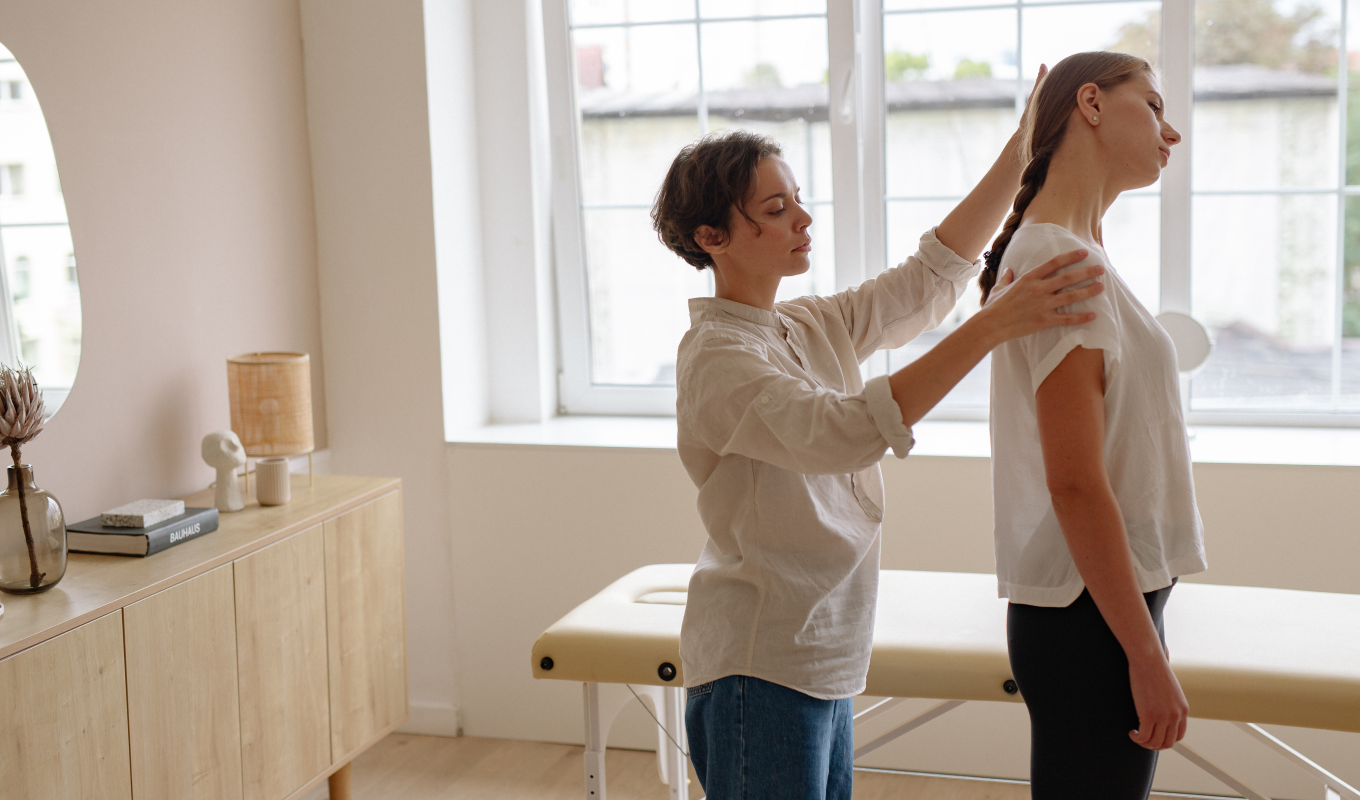
A licensed physical therapist can evaluate posture, mobility, and strength while developing a custom treatment plan that includes hands on care targeted exercises, flexibility training, and long term spine health strategies, all designed for your specific
areas of need.
For older adults in-home physical therapy is especially beneficial because it removes transportation barriers and ensures exercises are safe and appropriate in the home environment.
Easy strategies to reduce lower back pain:
- Light walking, gentle stretching, and core strengthening support the spine and reduce stiffness.
- Keeping objects close to the body, using your legs to bend instead of bending or twisting your back, and being smart about what you are picking up/lifting can all help prevent back strains
- Choose a chair with lumbar support, keep both feet flat on the floor, and take frequent standing breaks.
- For many people, ice can reduce inflammation during a new/acute flare up, while heat relaxes tight muscles once the initial irritation settles or for more chronic pain.