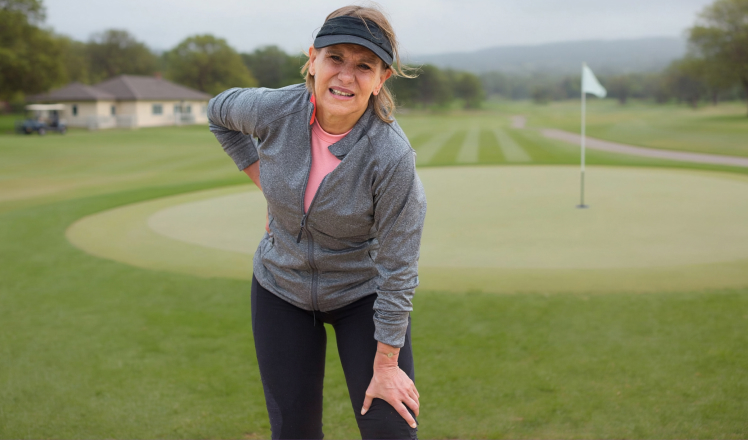
Missing time on the golf course because of an injury is deeply frustrating, especially when all you want is to enjoy a sunny morning on the fairway. Whether you are recovering from pain in your lower back, shoulder, hip, knee, or elbow, getting back to
your routine requires more than just resting until the discomfort subsides. A full golf swing can generate rotational forces up to eight times your body weight, which places heavy physical demands on your spine, joints, and stabilizing muscles. Fortunately,
most golf-related injuries are non-surgical and heal exceptionally well with guided physical therapy. With the right mobility, strength, and movement retraining, most golfers can safely return to full play in about 8 to 10 weeks. Here is a gentle,
five-step roadmap to help you rebuild your body's capacity and step back onto the first tee with total confidence.
Step 1: Make Sure you are Ready to Start and Respect Early Pain Signals

Before picking up a club, your body needs to demonstrate that it can comfortably handle everyday tasks without significant pain or compensations. Pain radiating into your leg or hip is a clear signal that your body is still protecting an injured area.
You might also notice muscle guarding, which happens when the muscles surrounding an injury tighten involuntarily to shield the joint. As this guarding calms down, daily movements like walking, bending, reaching, and standing up from a chair will
become natural and easy again. Working with an in-home physical therapist during this initial phase of recovery and rehab gives you a safe baseline test for your hip and back rotation, ensuring your tissues are calm before golf-specific training begins.
Step 2: Restore Mobility in Your Hips, Mid-back, and Neck

Imbalances between the left and right side of the core are one of the strongest predictors of golf-related back injuries, with the trail side often testing weaker. Targeted exercises like side planks help close that strength gap and protect your spine.
Training your glutes ensures they drive your hip rotation properly, while single-leg balance drills train your body to execute a smooth, controlled weight shift onto your lead leg through impact. This foundation allows your deep core to absorb rotational
loads safely without stressing your lower back. Restoring mobility and rebuilding strength can be done safely through physical therapy before starting golf-specific training.
Step 3: Rebuild Core Strength and Single-leg Stability

Imbalances between the left and right side of the core are one of the strongest predictors of golf-related back injuries, with the trail side often testing weaker. Targeted exercises like side planks help close that strength gap and protect your spine.
Training your glutes ensures they drive your hip rotation properly, while single-leg balance drills train your body to execute a smooth, controlled weight shift onto your lead leg through impact. This foundation allows your deep core to absorb rotational
loads safely without stressing your lower back.
Step 4: Start with Short, Controlled Swings and Progress Gradually
Being able to do exercises in your living room does not immediately mean your body is ready for 18 holes. You should reintroduce golf-specific movements gradually by focusing on your short game first. A proven progression starts with putting and chipping,
moves to half swings and full iron shots, advances to driving range practice, and eventually leads to course play. This step-by-step approach protects healing tissues while steadily rebuilding your swing confidence. It is vital to monitor how your
body feels both during practice and over the next 24 hours, adjusting your activity if you notice any lingering soreness.

Step 5: Return to Full Rounds and Protect your Longevity
Playing a complete round of golf involves walking several miles, repeatedly swinging a club, and bending to pick up your ball. When you are ready to return to the course, start by playing nine holes rather than jumping straight into 18, and avoid playing
on consecutive days while your endurance rebuilds.

Establishing
a personalized pre-round warm-up routine is essential, as golfers who warm up regularly experience significantly fewer injuries. True recovery is about more than just a single pain-free swing; it is about feeling strong, moving effortlessly, and waking
up the next morning ready to enjoy the game for years to come.

Ready to Get Back on The Green Pain-free?
Book a visit with a Luna physical therapist today to build your personalized, in-home golf recovery and rehab plan.
Free Download
Golf Return Recovery and Rehab Guide
Learn the five essential steps to safely return to golf after an injury. Discover how in-home physical therapy helps in recovery and rehab to rebuild your swing and prevent setbacks.
Download Full Guide