Early recovery moves by the day. The relationship has to keep up.
In the first weeks after a stroke, recovery can move quickly — and unevenly. What a patient can do on Monday may look different by Thursday.
A Luna physical therapist and patient aren't simply meeting on a schedule. They're tracking a moving target together: the arm that tires two reps sooner than yesterday, the sentence that stalls halfway through, the step that finally clears the threshold
without a spot.
A fixed protocol can't keep pace with recovery moving that fast. A physical therapist who sees the changes, visit after visit, can.
That relationship is what closes the gap between appointments. A patient who trusts their therapist is more likely to mention the dizziness they've been noticing, the near-fall they almost dismissed, the fatigue that suddenly changed, or the movement
that's becoming harder instead of easier.
That candor matters. Good neurological care depends on knowing when recovery is progressing — and when something has changed enough to require a different plan or another member of the care team.
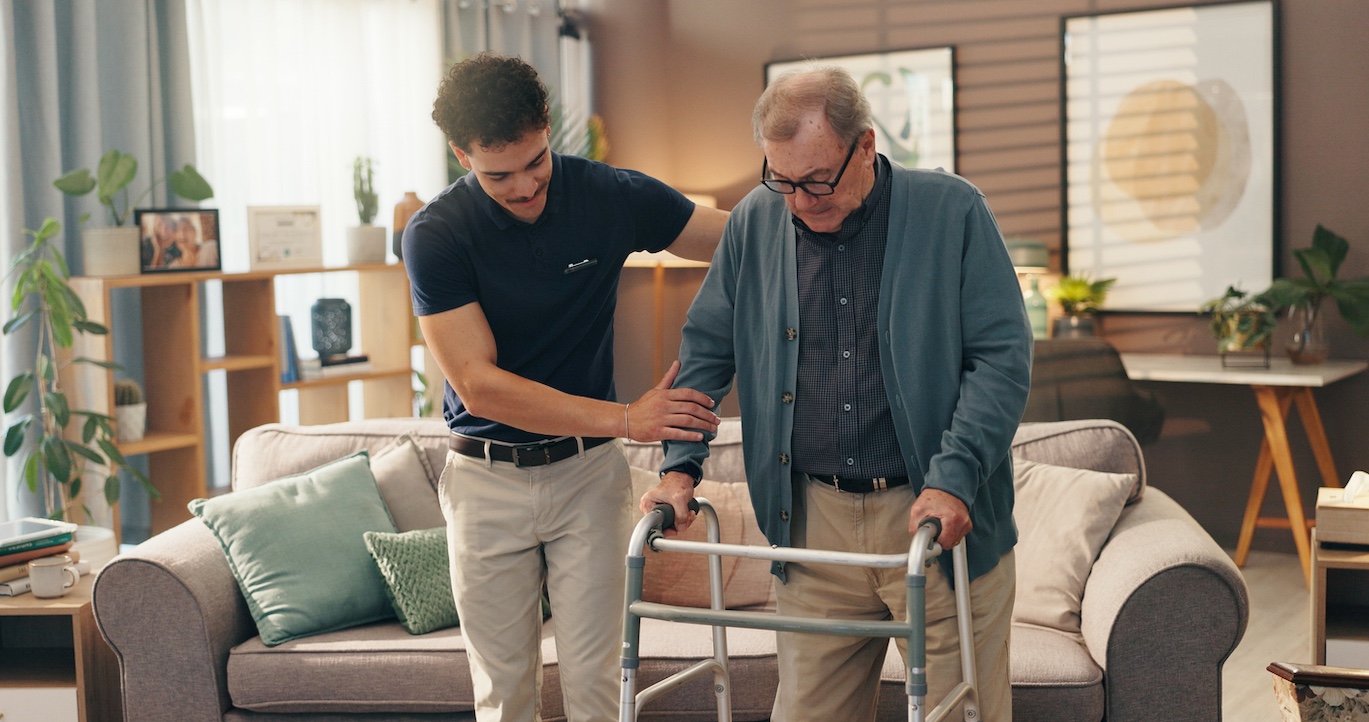
For stroke patients, the home isn't a substitute for a rehab gym. It's the terrain recovery actually has to conquer. Every gain gets tested exactly where it will be used: the doorway a walker has to clear, the stairs to the bedroom, the chair a patient
has to rise from, the counter a weakened hand has to reach across.
Family members pick up the same warning signs a physical therapist watches for, turning the household into part of the recovery team.
Progress doesn't have to be translated from a simulated environment into real life. The work is already happening where real life happens.
WHAT TOP-OF-LICENSE CARE LOOKS LIKE
Beyond basic mobility and transfers, top-of-license stroke care means:
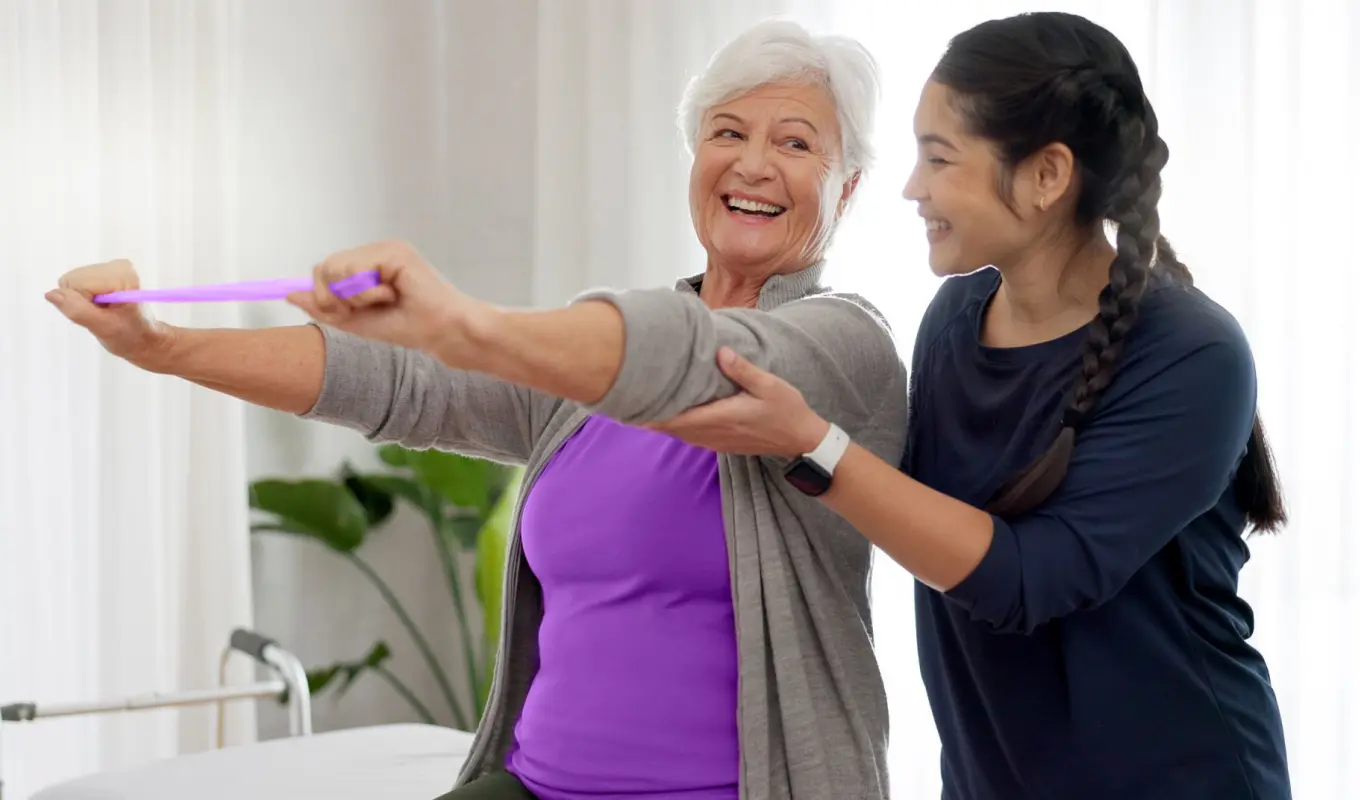
- Driving repetition with purpose — using intensive, task-specific practice to rebuild walking and functional movement.
- Matching the intervention to the impairment — whether that means Constraint-Induced Movement Therapy, gait training, Functional Electrical Stimulation, orthotic support, or another evidence-based approach.
- Progressing intensity as capacity returns — rather than letting a patient remain on yesterday's program.
- Measuring recovery objectively — and using those findings to decide what comes next.
- Distinguishing recovery from compensation — and deciding when to challenge the patient further, introduce assistance, or change strategy.
AnnMarie Ciulla: High-Intensity Gait Training (HIGT) leverages high aerobic demand and repetitive, high-quality gait mechanics to accelerate neurological rehabilitation. Practicing top-of-license care at Luna means taking this clinical model directly
into the patient's home, utilizing their specific home layout, overcoming daily environmental barriers, and training on outdoor terrains. The integration of the patient's natural environment improves functional carryover and builds real-world safety
and mobility.
JUDGMENT IN ACTION
Stroke recovery calls for constant recalibration.
Top-of-license care means:
- Managing the functional consequences of tone and spasticity through positioning, movement strategies, bracing, and orthotic decisions.
- Coordinating with neurology or physiatry when medication, injections, or other medical interventions may complement rehabilitation.
- Adjusting the plan as a patient's recovery stage changes — not on a fixed schedule.
- Knowing when the patient is ready for more intensity, more independence, or a different kind of challenge.
- Recognizing when a new or worsening problem needs escalation beyond therapy.
AnnMarie Ciulla: When treating a patient presenting with post-stroke foot drop, I focus on optimizing gait mechanics, targeted strengthening, and functional training. However, when conservative therapy plateaus, practicing at the top of my license means
recognizing the need for orthotic intervention. I actively coordinate with both the patient's neurologist and the orthotics team to facilitate bracing to complement active rehabilitation. This interdisciplinary approach ensures the patient receives
the bracing necessary to safely restore their activities of daily living and enhance their overall quality of life.
THE HOME AS A CLINICAL ADVANTAGE
In-home stroke rehabilitation gives the therapist information a clinic cannot fully reproduce.
The physical therapist sees the actual staircase. The bathroom transfer. The rug that catches a toe. The kitchen layout that turns a simple reach into a balance problem. The family member who helps too much, or not enough.
Those details aren't peripheral. They shape the treatment plan.
Top-of-license care means using the environment itself as clinical data, then turning that information into safer movement, smarter progression, and greater independence.
AnnMarie Ciulla: Delivering physical therapy directly in a patient's home allows Luna clinicians to conduct a real-time environmental assessment of a patient’s living space. By evaluating movement patterns in their daily routines, we can proactively identify
and mitigate safety hazards. This can include removing area rugs or strategically rearranging furniture to establish wider, safer pathways. This specialized, in-home environmental modification directly reduces fall risk, maximizes safety, and empowers
patients to reclaim their overall functional independence.
THE FULL ARC
For a patient, full-arc recovery means having a physical therapist who knows where they started, sees each stage of change, and can keep adapting the plan as function returns.
For the therapist, it means more than completing a plan of care. It means seeing how dozens of clinical decisions accumulate: the first safe transfer, the first unsupported steps, the first trip outside the house, the first task a patient can do again
without help.
That continuity turns the therapeutic relationship into something clinically useful: better information, better judgment, and a plan that keeps moving with the patient.
AnnMarie Ciulla: The full journey of recovery involves a deep commitment to guiding a stroke survivor from their day of deepest vulnerability back to complete self-reliance. Luna clinicians enter patients' homes not just to treat deficits, but to
build a trusted relationship, continuously pivoting our strategy from foundational safety to real-world functional activities. The ultimate reward of this journey is witnessing the graduation day when our presence is no longer needed, because they
have fully reclaimed their independence.
JOIN THE MOVEMENT
Stroke recovery doesn't follow a script. Neither should the therapist.
At Luna, top-of-license practice means having the autonomy to see what changed, decide what comes next, and keep moving with the patient toward the thing that matters most: independence.
SOURCES
1. Wolf, S.L., et al. (2006). Effect of Constraint-Induced Movement Therapy on Upper Extremity Function 3 to 9 Months After Stroke: The EXCITE Randomized Clinical Trial. JAMA, 296(17), 2095-2104.
2. American Physical Therapy Association. Clinical Practice Guideline to Improve Locomotor Function Following Chronic Stroke, Incomplete Spinal Cord Injury, and Brain Injury.
3. American Heart Association/American Stroke Association. Guidelines for Adult Stroke Rehabilitation and Recovery.
4. Mehrholz, J., et al. (2017). Treadmill training and body weight support for walking after stroke. Cochrane Database of Systematic Reviews.